↓
 
  • Home
  • About the Author
  • Series
    • Carman Barnes: Five-Minute Movie Star
    • Crazy and Crazier
    • Films of Henry Hathaway
    • History of Cinerama: “Cinerama-Rama!”
    • Luck of the Irish: Darby O’Gill and the Little People
    • Marcel Delgado
    • Minority Opinion: The Magnificent Ambersons
    • Movie Souvenir Playing Cards
    • Shirley Temple Revisited: “Bright Eyes, 1928-2014”
    • The Bard of Burbank
    • The Fog of Lost London
    • The Museum That Never Was
    • William Wyler
  • Links and Resources
  • Jim’s Fiction
    • Glamour Boys
    • Items from the Scrapbook of Cosmo Brown
    • Sensible Christmas Wish, The
  • Contact

Jim Lane's Cinedrome

Classic Hollywood

Post navigation

← Older posts
Newer posts →

Cinevent, Day 4

Jim Lane's Cinedrome Posted on May 31, 2010 by Jim LaneJuly 16, 2016

Sunday’s highlights:

(1) Chad Hanna (1940) Stable boy Henry Fonda runs away with a moth-eaten circus in 1841, in gorgeous Fox Technicolor* and with spot-on atmosphere courtesy of director Henry King. There’s also a pretty amazing scene of 16-year-old Linda Darnell training to be a bareback rider; it’s one long take of her horse cantering round and round the tiny circus ring, with Darnell bouncing in her training harness scrambling to hold on and her trainer barking instructions. The shot goes on for what seems like five minutes without a cut, and you can’t take your eyes off the screen; the plot goes nowhere during that time, but we learn a lot about 19th century circus life and the grit and determination of Darnell’s character. (And incidentally, we learn something about Darnell’s own grit — she was allergic to horses.)

(2) Roadhouse Nights (1930) Here’s another one of those synchronicity moments: this is one of the movies Richard Barrios talks about in A Song in the Dark, with Helen Morgan as a saloon singer embroiled in her gangster boyfriend’s crimes. Not a musical exactly, but with plenty of music — including several songs from Morgan (in her prime, before the booze really laid her low) and movie newcomer Jimmy Durante (it’s also Durante’s only movie appearance with his vaudeville partners Lou Clayton and Eddie Jackson).

Plus an honorable mention for Woman on the Run (1950), a tight little noirish thriller set in San Francisco with Ann Sheridan as the estranged wife of a man on the run from the killer whose crime he witnessed. This one joins a select list of movies (Vertigo, The Lineup, Experiment in Terror) that give us a visual record of what San Francisco looked like before becoming crusted over with skyscrapers. (The amusement park climax isn’t San Francisco, however; it’s Carmel.)

*And speaking of Technicolor, here’s a good rule of thumb: If you want to see Golden Age Technicolor at its best, for the 1930s look to Selznick International (A Star Is Born, Nothing Sacred, Gone With the Wind); for the ’40s, 20th Century Fox (Hello, Frisco, Hello; Wilson; The Black Swan); and for the ’50s, Paramount (Shane, The War of the Worlds, White Christmas).

Posted in Blog Entries

Cinevent, Day 3

Jim Lane's Cinedrome Posted on May 30, 2010 by Jim LaneJuly 16, 2016

Saturday’s highlights in Columbus:

(1) Straight Shooting (1917) This was 23-year-old John Ford’s first directorial effort (“Jack Ford,” as he was billed at the time), and it’s a remarkable document as well as a good, solid archetypal western film. Here in a compact 60 minutes is the John Ford western fully formed, with some images and frame compositions as striking as anything Ford would do later on. Harry Carey, Ford’s favorite leading man, demonstrates the mold into which Ford would later pour young John Wayne, and which would remain Wayne’s forever after that (see the last shot of the Duke in The Searchers for his and Ford’s conscious tribute to Carey).

(2) The Fleet’s In (1942) This wartime musical combined Dorothy Lamour, new-minted leading man William Holden, and an excellent score by director Victor Schertzinger (music) and Johnny Mercer (words) that included the perennials “Tangerine” and “I Remember You.” There’s a touching story connected with the latter song, recounted in the Cinevent program notes. Schertzinger, a popular and respected man on the Paramount lot, died unexpectedly midway through production on the movie, and shooting was closed down for a time. When they resumed work, the first day’s shooting was devoted to Lamour’s rendition of “I Remember You.” The practice, of course, was for the performers to lip-synch to a playback of the soundtrack, recorded weeks earlier. As they reached the end of the first take and the sound man allowed the playback to continue past the end of the song, Schertzinger’s voice unexpectedly came over the loudspeakers, complimenting Lamour during the original recording session (as both director and composer) on her excellent performance of the song. The sound of his voice (combined, no doubt, with the sentiment of the song) was too much for Lamour, and she simply fell to pieces on the set.

Posted in Blog Entries

Cinevent, Day 2

Jim Lane's Cinedrome Posted on May 29, 2010 by Jim LaneJuly 16, 2016

Highlights of the first day at Cinevent here in Columbus were:


(1) Hired Wife (1940) Rosalind Russell plays a secretary in love with boss Brian Aherne, who doesn’t have the presence of mind to fully appreciate her. When he runs into tax trouble, she agrees to help out by marrying him — strictly on paper, you understand, just for business purposes. The inevitable comic complications ensue before the inevitable clinch at the fadeout. Writers Richard Connell and Gladys Lehman frost this cake with plenty of tasty dialogue, Brian Aherne never looked so lively and animated, and the actress was never born who could beat Rosalind Russell with a mouthful of good dialogue. And Roz, just coming off the breakthrough one-two punch of The Women and His Girl Friday, was sitting on top of the world, and you can see she knew it; and

(2) Chicago (1927) This was the first (and silent) film treatment of the Maurine Watkins play that would serve as the source for 1940’s Roxie Hart with Ginger Rogers, and (of course) the Tony-and-Oscar-sweeping musical. Long feared lost, this version surfaced some years ago, and it’s a lively two hours. Phyllis Haver makes a Roxie Hart who can stand beside Ginger Rogers, Gwen Verdon and Renee Zellweger without hanging her peroxided head. (And I couldn’t help reflecting what a nice meal Marion Davies could have made of the role — but of course, Hearst wouldn’t have let her anywhere near it. Not in a thousand years.)

Now it’s back to the program, so if you’ll excuse me…

Posted in Blog Entries

Cinevent 42

Jim Lane's Cinedrome Posted on May 28, 2010 by Jim LaneJune 28, 2016

 I’m interrupting my posts on Henry Hathaway to post from Columbus, Ohio, where the 42nd Cinevent is about to begin. If you don’t know about Cinevent, you certainly should, especially if you live within convenient travel distance of Columbus (and after all, I come in all the way from Sacramento). It’s a “classic film convention” held every Memorial Day Weekend in Columbus; from Friday through Monday there are movies all day and deep into the night. The years of vintage range roughly from 1914 to 1950, with the program breaking down to about two-thirds talking pictures and one-third silents with live piano accompaniment, by either Dr. Philip Carli or David Drazin, two of the foremost silent film accompanists in America today. In addition to the movies, there are the dealers’ rooms, where any manner of memorabilia are available to collectors; you’ve already seen some of it here.

I’d been hearing about Cinevent for decades because my uncle — who lives in Muncie, Indiana, not too far from Columbus — has been coming here since the 1960s. Whenever he spoke of it, I’d think, “One of these years…” Well, one of those years finally came in 1998, and I haven’t missed a Cinevent since then; I have a standing commitment for Memorial Day from now on.

This year, there are some unusual — almost eerie — touches of synchronicity with this blog. One of the first features this afternoon is the 1924 silent Open All Night, on which none other than Henry Hathaway himself served as assistant under director Paul Bern (the great Howard Hawks also served as production manager). And Cinevent’s annual Saturday Morning Animation Festival will include a 1917 short by Willis O’Brien, the special effects pioneer who hired Marcel Delgado to build the models for The Lost World and King Kong. The title is certainly intriguing: Prehistoric Poultry.

For now, however, I have to free up the hotel’s computer. Stay tuned, and I’ll try to post more as the weekend progresses. No promises, though; the days are full and pass quickly here.

Posted in Blog Entries

“A Genial Hack,” Part 1

Jim Lane's Cinedrome Posted on May 26, 2010 by Jim LaneSeptember 1, 2016

Henry Hathaway once said there was a time when he would have welcomed being called an “accomplished technician” or “studio workhorse.” “But the more I think about it, the more I realize it makes me seem to be a genial hack.” Hathaway was indeed an accomplished director, and he worked long and well in the studio system, first at Paramount, then for twenty years at 20th Century Fox. But he was nobody’s hack.

I guess I’ve always been a little over-protective of Henry Hathaway. Several years ago I bought one of those big encyclopedias that claim to tell you “everything you need to know” about American movies (actually, that should’ve tipped me off — the really good ones don’t do that). This one — well, let’s just say it was published under the aegis of a very prestigious group of people. The first thing I did was to turn to the biographical section on directors to see what they said about Hathaway. He wasn’t listed. I scanned back and forth across the pages, just to make sure I wasn’t seeing what I thought I didn’t see. Then I closed the book and never opened it again; when the donation truck came around, into the bin it went.


Whoever compiled that book, I didn’t expect them to admire Hathaway as much as I do — I don’t suppose anyone does that. But I wasn’t going to let them act as if he never existed. Not if they wanted to take up space on my bookshelf.

I first became aware of Hathaway the night I saw How the West Was Won at the Orpheum Theatre in San Francisco. I was just beginning to notice movie directors; I wasn’t one of those film-buff prodigies who could discourse on the Auteur Theory at an age when other kids were reading Fun with Dick and Jane. I knew about Cecil B. DeMille, and Alfred Hitchcock, but everybody knew who they were. And I knew about John Ford, one of the other credited directors on How the West Was Won. George Marshall, the third director, not so much (though I knew about Destry Rides Again, one of his pictures). But Hathaway’s name caught my eye for the simple reason that the program said he was born in Sacramento, where I lived.
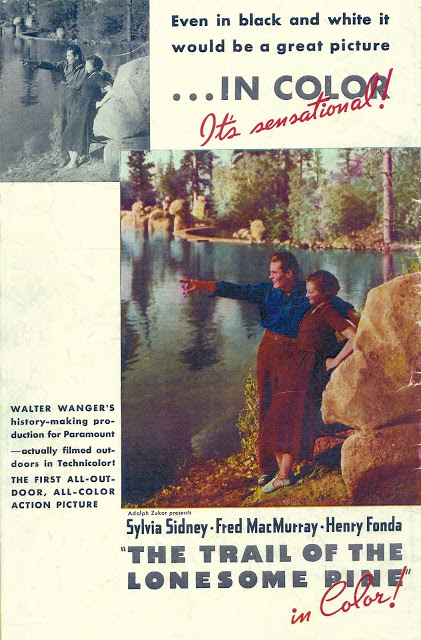


Now that I knew his name, I began to notice that Henry Hathaway directed some movies that I’d always loved. The Trail of the Lonesome Pine (1936), which I saw on a reissue at the age of eight. North to Alaska (1960). And others that I’d seen on TV in the 1950s and early ’60s: Call Northside 777 (1948), Down to the Sea in Ships (1949), Fourteen Hours and The Desert Fox (both 1951). Others would later make the list: The Sons of Katie Elder (1965), Nevada Smith (1966), True Grit (1969). And, of course, How the West Was Won itself.

Hathaway was born in Sacramento (March 13, 1898), but it wasn’t exactly his home town; it was just where his actress mother happened to be on the point in her tour when his time came. (Traveling theater companies didn’t offer maternity leave in 1898.)

Henry Hathaway may well be the only hereditary Belgian nobleman who ever made it as a Hollywood movie director. His name at birth was Marquis Henri Leopold de Fiennes, a title he inherited through his father. Hathaway said his father’s name was Henry Rhody, but he appears to have been a bit of a theatrical jack of all trades — advance man, stage manager, actor — under the name Rhody Hathaway. Hathaway said his mother’s maiden name was Jean Weil, though other sources say she was born Marquise Lillie de Fiennes in Budapest in 1876. I’m inclined to take her son’s word on this point, but whatever the case, Mom acted under the name Jean Hathaway, and before long little Henri Leopold had taken it too. (Also, Henry’s paternal grandfather was supposed to secure the Hawaiian Islands for Belgium in the 1860s, and settled in San Francisco when the deal fell through. Considering how Belgium later administered its colonial holdings in Africa’s Congo, native Hawaiians might have cause to be grateful that Hathaway’s grandfather failed.)
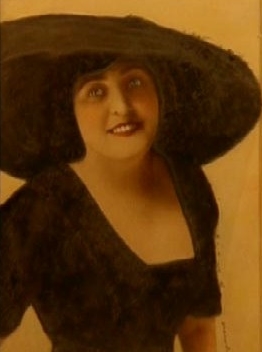
Final - Jean H02


Jean Hathaway seems to have been no ordinary woman. Only 22 when her son was born, by the time they both entered movies in 1911 or ’12, she had moved into “character parts” — somebody’s mother or aunt or older sister, or a villainess if one was called for. I don’t know how old she is in this picture, but it seems to me she’s more or less the same age as Henry in the picture below, taken on the set of The Trail of the Lonesome Pine, when he was 37.


That’s Henry standing on the left, next to Nigel Bruce. (At the table are Fred MacMurray, Henry Fonda and Fred Stone.) You can see that Henry certainly took after his mother.

In more ways than one. Rhody Hathaway seems not to have had the theater bug as severely as his wife — it’s never been the most stable career path, and it was downright perilous then. Henry’s father eventually left the biz and got into electronics — a more obviously burgeoning field in the 1910s and ’20s — working on an early x-ray machine. Jean continued to tour, occasionally getting stranded, in those pre-Equity days, when a company would go bankrupt on the road.

When this happened to her in 1911 in San Diego, leaving her broke with no way to get home, she cast about for some kind of job to earn train fare, and landed with the American Film Company in nearby La Mesa. Moviemaking was a footloose operation in those days, grinding out quickie one-reelers for the nickelodeons, but here was steady work in one place, so when she saw that it was going to pan out, she sent for Henry and his sister, who had been living with relatives in San Francisco.

Henry started out as a child actor — usually, he said, playing the kid in the opening scene who grows up to be the leading man. As he grew into his teens, he went to work at Universal, first as a laborer, then a prop man. (His last acting credit was in 1917, just before a short army stint stateside during World War I.) After mustering out of the army, he went back to movies as a prop man at Goldwyn Studios, then Paramount, where he worked as an assistant director throughout the 1920s, learning the craft under men like Josef von Sternberg and Victor Fleming. He graduated into directing in 1933, remaking silent Paramount westerns for sound — only on a lower budget, re-using footage from the silent versions wherever possible. (“I had to have the new leads costumed the same as the silent players.”)

Few directors had a career to compare with Henry Hathaway’s. He literally got in on the ground floor, before there was even a Hollywood as we know it today. He made his first movie in 1911, his last in 1974. He started out digging ditches and lugging equipment, and rose to directing huge projects with the biggest stars in the business. Along the way he pioneered sound, color and narrative Cinerama, the wonder of the age throughout the 1950s.


The performances he got from his actors are nothing to sneeze at either. He made a star of Richard Widmark in Kiss of Death (1947) and landed an Oscar for John Wayne in True Grit. And Dorothy Lamour, that sweet, ever-befuddled foil for Bob Hope and Bing Crosby, never gave a good dramatic performance for any other director, but she did it for Hathaway twice, in Spawn of the North (1938) and Johnny Apollo (1940).

I’ll have more to say about some of Henry Hathaway’s movies later on. For now, take this as an introduction to the man, something to plug the hole in that encyclopedia I mentioned earlier — just in case you happened to buy it from the thrift store I donated it to.
Posted in Blog Entries, Henry Hathaway

Post navigation

← Older posts
Newer posts →
index sitemap advanced
search engine by freefind

Recent Posts

  • Twinkle, Twinkle, Little “Star” (Republished)

  • Sixty-Six Years’ Worth of Oscars

  • A Visit with Jody Baxter, Chick Mallison, Trooper Jeff Yorke et al.

  • Ave Atque Vale, Jody Baxter

Articles A – Z

You will find 222 posts in the category  on this blog.


Jump to , 4, A, B, C, D, E, F, G, H, I, J, L, M, N, O, P, R, S, T, U, W, Y

4

  • 40th Anniversary Tour: Jesus Christ Superstar

A

  • “A Genial Hack,” Part 1
  • “A Genial Hack,” Part 2: The Trail of the Lonesome Pine
  • “A Genial Hack,” Part 3: Peter Ibbetson
  • A “Christmas Wish” Returns
  • A Cinedrome “Christmas Tradition” Returns
  • A Cinedrome Pop Quiz
  • A Hitch in the Get-Along: State Secret
  • A Holiday Treat (I Hope!) for Cinedrome Readers
  • A Jigsaw Mystery
  • A Mystery Photo
  • A Time-Travel Studio Tour
  • A Treasure Trove of MGM Shorts, Part 1
  • A Treasure Trove of MGM Shorts, Part 2
  • A Visit with Jody Baxter, Chick Mallison, Trooper Jeff Yorke et al.
  • A Weekend With David O. Selznick
  • A-a-a-and We’re Back…!
  • Addio, Cinevent 42!
  • After a Brief Intermission…
  • America’s Canadian Sweetheart, 1921-2013
  • Andrew Sarris, 1928-2012
  • Auditioning for Immortality
  • Ave Atque Vale, Fairy Princess!
  • Ave Atque Vale, Jody Baxter

B

  • Bright Eyes, 1928-2014
  • Browsing the Cinevent Library, Part 1
  • Browsing the Cinevent Library, Part 2

C

  • C.B. Gets His Due
  • Camera Beauty
  • Cary-ing On
  • Catching Some Rays
  • Catting Around
  • CHAPTER I
  • CHAPTER II
  • Cinedrome Does Its Part
  • Cinedrome Wins 2012 CMBA Award
  • Cinedrome’s Annual Holiday Treat Returns
  • Cinerama-Rama!
  • Cinevent 2016 (Continued)
  • Cinevent 2016, Concluded
  • Cinevent 2016, Part 3
  • Cinevent 2016, Part 4
  • Cinevent 2017 – No. 49 and Counting, Part 1
  • Cinevent 2017 – No. 49 and Counting, Part 4
  • Cinevent 2017 — No. 49 and Counting, Part 2
  • Cinevent 2017 — No. 49 and Counting, Part 3
  • Cinevent 42
  • Cinevent 45
  • Cinevent 50 – Day 1
  • Cinevent 50 – Day 2
  • Cinevent 50 – Day 3 (Part 2)
  • Cinevent 50 – Prelude
  • Cinevent 50 — Day 3 (Part 1)
  • Cinevent 50 — Day 4
  • Cinevent 51 – Day 1, Part 1
  • Cinevent 51 – Prelude
  • Cinevent 51 — Day 1, Part 2
  • Cinevent 51 — Day 2
  • Cinevent 51 — Day 3
  • Cinevent 51 — Day 4
  • Cinevent Turns 50
  • Cinevent, Day 2
  • Cinevent, Day 3
  • Cinevent, Day 4
  • CMBA Blogathon: Come Next Spring (1956)
  • CMBA Blogathon: Kitty (1945)
  • Crazy and Crazier, Part 1
  • Crazy and Crazier, Part 2
  • Crazy and Crazier, Part 3
  • Crazy and Crazier, Part 4

D

  • “Don’t Stay Away Too Long…”

E

  • Elizabeth Taylor, 1932-2011

F

  • Films of Henry Hathaway: Brigham Young (1940)
  • Films of Henry Hathaway: Down to the Sea in Ships
  • Films of Henry Hathaway: Down to the Sea in Ships
  • Films of Henry Hathaway: Fourteen Hours (1951)
  • Films of Henry Hathaway: Prince Valiant
  • Films of Henry Hathaway: The Shepherd of the Hills
  • First Comes the Phone Call
  • Five-Minute Movie Star: Carman Barnes in Hollywood — Epilogue
  • Five-Minute Movie Star: Carman Barnes in Hollywood, Part 1
  • Five-Minute Movie Star: Carman Barnes in Hollywood, Part 2
  • Five-Minute Movie Star: Carman Barnes in Hollywood, Part 3
  • Flo Chart

G

  • “Glamour Boys” Begins…
  • “Glamour Boys” Continues…
  • Grand Opening!

H

  • “Here’s a Job for You, Marcel,” Part 1
  • “Here’s a Job for You, Marcel,” Part 2
  • “Here’s a Job for You, Marcel,” Part 3
  • Harlow in Hollywood

I

  • “Is Virginia Rappe Still Alive?”
  • Items from the Scrapbook of Cosmo Brown
  • Items from the Scrapbook of Cosmo Brown

J

  • Jigsaw Mystery — Solved?

L

  • Liebster Blog Award
  • Lost & Found: Alias Nick Beal
  • Lost & Found: Night Has a Thousand Eyes
  • Lost and Found: Miss Tatlock’s Millions (1948)
  • Luck of the Irish: Darby O’Gill and the Little People, Part 1
  • Luck of the Irish: Darby O’Gill and the Little People, Part 2
  • Luck of the Irish: Darby O’Gill and the Little People, Part 3
  • Luck of the Irish: Darby O’Gill and the Little People, Part 4

M

  • “MOVIE” Souvenir Playing Cards
  • Merry Christmas from Cinedrome!
  • MERRY CHRISTMAS from Cinedrome!
  • Mickey and Judy — Together at Last
  • Minority Opinion: The Magnificent Ambersons, Part 1
  • Minority Opinion: The Magnificent Ambersons, Part 2
  • Minority Opinion: The Magnificent Ambersons, Part 3
  • Minority Opinion: The Magnificent Ambersons, Part 4
  • Minority Opinion: The Magnificent Ambersons, Part 5
  • Minority Opinion: The Magnificent Ambersons, Part 6
  • Movie Playing Cards: 3 of Hearts – Geraldine Farrar
  • Movie Playing Cards: 5 of Spades – George Walsh
  • Movie Playing Cards: 9 of Diamonds – Mary Miles Minter
  • Moving Right Along…
  • Mr. Stewart Goes to War

N

  • Nuts and Bolts of the Rollercoaster

O

  • Our Mr. Webb

P

  • Picture Show 02 — Day 1
  • Picture Show 02 — Day 2
  • Picture Show 02 — Day 3
  • Picture Show 02 — Day 4
  • Picture Show 02, Day 00 — Prelude at the Wex
  • Picture Show 2022 – Day 2
  • Picture Show 2022 — Day 1
  • Picture Show 2022 — Day 3
  • Picture Show 2022 — Day 4
  • Picture Show 2022 — Prelude
  • Picture Show No. 3 — Day 1, Part 1
  • Picture Show No. 3 — Prelude
  • Picture Show No. 3 — Tying Off a Loose End
  • Please Stay Tuned

R

  • R.I.P. Ray Harryhausen, 1920-2013
  • Remembering the Night
  • Remembering the Night
  • Return of “Movie” Souvenir Playing Cards
  • Returning to Lost London
  • Returning to Lost London (Reprinted)
  • Rex the First
  • Rhapsody in Green and Orange – EPILOGUE
  • Rhapsody in Green and Orange, Part 1
  • Rhapsody in Green and Orange, Part 2
  • RIP Dean Stockwell, 1936-2021

S

  • Say, What Ever Happened to Carman Barnes?
  • Shirley Temple Revisited, Part 1
  • Shirley Temple Revisited, Part 10
  • Shirley Temple Revisited, Part 11
  • Shirley Temple Revisited, Part 12
  • Shirley Temple Revisited, Part 13
  • Shirley Temple Revisited, Part 14
  • Shirley Temple Revisited, Part 2
  • Shirley Temple Revisited, Part 3
  • Shirley Temple Revisited, Part 4
  • Shirley Temple Revisited, Part 5
  • Shirley Temple Revisited, Part 6
  • Shirley Temple Revisited, Part 7
  • Shirley Temple Revisited, Part 8
  • Shirley Temple Revisited, Part 9
  • Silent Weekends
  • Silents in Kansas 2011, Part 2
  • Sixty-Six Years’ Worth of Oscars
  • Songs in the Light, Part 1
  • Songs in the Light, Part 2
  • Songs in the Light, Part 3
  • Speak (Again) of the Devil
  • Speak of the Devil…

T

  • “The Best of Us,” Part 1
  • “The Best of Us,” Part 2
  • “The Best of Us”, Part 1
  • “The Best of Us”, Part 2
  • Ted Sierka’s Brush with Greatness
  • The 11-Oscar Mistake
  • The Annotated “Lydia the Tattooed Lady”
  • The Bard of Burbank, Part 1
  • The Bard of Burbank, Part 2
  • The Could-Have-Been-Greater Moment
  • The Duke of Hollywood
  • The Fog of Lost London, Part 1
  • The Fog of Lost London, Part 1
  • The Fog of Lost London, Part 2
  • The Fog of Lost London, Part 2
  • The Fog of Lost London, Part 3
  • The Fog of Lost London, Part 3
  • The Fog of Lost London, Part 4
  • The Fog of Lost London, Part 4
  • The Kansas Silent Film Festival 2011
  • The Last Cinevent, the First Picture Show — Day 1
  • The Last Cinevent, the First Picture Show — Day 2
  • The Last Cinevent, the First Picture Show — Day 3
  • The Last Cinevent, the First Picture Show — Day 4
  • The Man Who Saved Cinerama
  • The Mark of Kane
  • The Museum That Never Was, Part 1
  • The Museum That Never Was, Part 2
  • The Return of the King
  • The Rubaiyat of Eugene O’Neill
  • The Sensible Christmas Wish
  • The Shout Heard Round the World
  • The Stainless Steel Maiden, 1916-2020
  • The Stamm
  • Tony Curtis 1925-2010
  • Tragedy in Nevada, January 1942
  • Twinkle, Twinkle, Little ‘Star’
  • Twinkle, Twinkle, Little “Star” (Republished)

U

  • Ups and Downs of the Rollercoaster, Part 1
  • Ups and Downs of the Rollercoaster, Part 2
  • Ups and Downs of the Rollercoaster, Part 3
  • Ups and Downs of the Rollercoaster, Part 4
  • Ups and Downs of the Rollercoaster, Part 5
  • Ups and Downs of the Rollercoaster, Part 6

W

  • “Who Is the Tall Dark Stranger There…”
  • Wings, Again
  • Wyler and “Goldwynitis”
  • Wyler and “Goldwynitis” (reprinted)
  • Wyler Catches Fire: Hell’s Heroes
  • Wyler Catches Fire: Hell’s Heroes
  • Wyler’s Legacy
  • Wyler’s Legacy (reprinted)

Y

  • Yuletide 2018

Copyright Notice

All textual content Copyright © date of posting by Jim Lane. All rights reserved. Unauthorized use and/or duplication of this material without express written permission from this blog’s author is strictly prohibited. Excerpts and links may be used, provided that full and clear credit is given to Jim Lane and Jim Lane’s Cinedrome with appropriate and specific direction to the original content.

↑